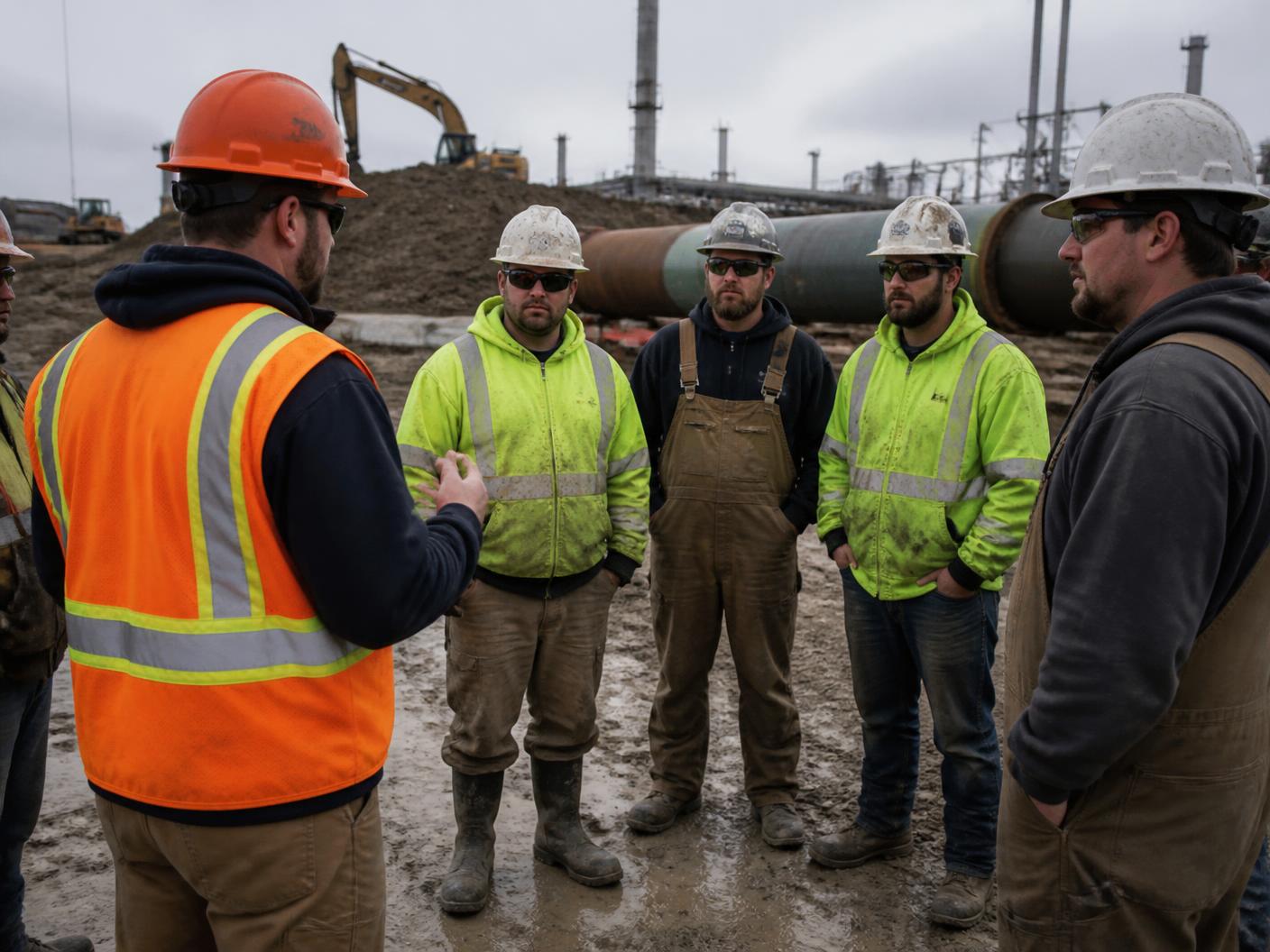
Onsite safety professional working with a construction crew during active work

    Onsite Safety Professionals

    Onsite Safety Professionals for Construction Projects

    Qualified safety personnel placed on your project — full-time, part-time, or for a defined phase — who carry the safety program into the field instead of monitoring it from a trailer.

    The problem

    Projects need coverage on a project schedule, not a hiring schedule.

    Owner and general contractor requirements often specify a dedicated safety professional on site — sometimes by headcount ratio, sometimes by scope. That requirement arrives with a mobilization date. Recruiting, vetting, and onboarding a qualified construction safety professional does not fit inside it.

    The other version of the problem is coverage gaps: a safety manager stretched across four projects, an extended leave, a peak phase where a single person cannot walk the work, or a serious event that suddenly requires daily field presence.

    We place safety professionals who have worked construction — people who can read an AHA, hold a pre-task planning conversation with a foreman, and make a defensible call on a hazard without stopping the whole project to ask.

    Placement types

    Coverage matched to the project.

    Project Safety Manager

    Full accountability for the project safety program: owner and GC interface, subcontractor management, documentation, inspections, training, and incident response.

    • Large or multi-phase projects
    • Owner-required dedicated role
    • Subcontractor-heavy scopes

    Site Safety Professional

    Daily field presence: observation and correction, pre-task planning support, inspections, orientations, toolbox talks, and documentation upkeep.

    • Full-time or part-time coverage
    • Ratio-driven requirements
    • Peak-phase reinforcement

    Phase & short-term coverage

    Coverage for a defined window — a high-exposure phase, a shutdown or turnaround, a vacancy, or a leave — without adding permanent headcount.

    • Critical lifts and energized phases
    • Vacancy and leave coverage
    • Shutdowns and turnarounds

    What they do on site

    Field work, not clipboard presence.

    • Daily documented site inspections with correction at the point of exposure.
    • Pre-task planning and AHA review with the crews actually performing the work.
    • New hire and visitor orientations, plus verification of training and certification records.
    • Toolbox talks and targeted training on the exposures active that week.
    • Subcontractor coordination and accountability for their own programs and hazard analyses.
    • Permit administration: hot work, confined space entry, energized work, excavation, critical lifts.
    • Equipment and system inspections, including fall protection, rigging, ladders, and access equipment.
    • Incident response, first-aid coordination, investigation support, and required notifications.
    • Owner and general contractor safety reporting and meeting participation.
    • Keeping site-specific plans and AHAs current as sequence and conditions change.

    How placement works

    From request to boots on site.

    1. 01

      Requirement definition

      Project location and duration, scope and exposures, owner requirements, shift schedule, required certifications, and start date.

    2. 02

      Candidate match

      We identify personnel whose construction background fits the scope — the sector, the exposures, and the level of autonomy the role requires.

    3. 03

      Your review

      You review qualifications and interview. The placement is not final until the project team is satisfied with the fit.

    4. 04

      Onboarding & support

      Site onboarding, expectation setting with your project team, and ongoing consulting support behind the person on site.

    Every placement is backed by the same consulting practice that writes the documentation. If the person on your site hits a question that needs a program revision, a standard interpretation, or an investigation, that support is already in place.

    Common questions

    How quickly can you place someone?
    It depends on location, duration, and required qualifications. Tell us the start date and we will be straight with you about whether it is achievable rather than confirm and scramble.
    Can you cover projects outside Nebraska?
    Yes. We are Nebraska-based and support projects nationwide. Travel and per diem arrangements are part of the placement conversation.
    Do you place for short durations?
    Yes — phase coverage, shutdowns, and vacancy coverage are common. Short windows do change availability, so earlier notice matters more.
    Who does the placed professional report to?
    Your project team, day to day. We stay engaged behind them for technical support and to make sure the role is delivering what the project needs.

    Need coverage on a project?

    Give us the location, duration, scope, and start date. We will tell you what we can staff and how fast.

    Nebraska-based · nationwide project support