
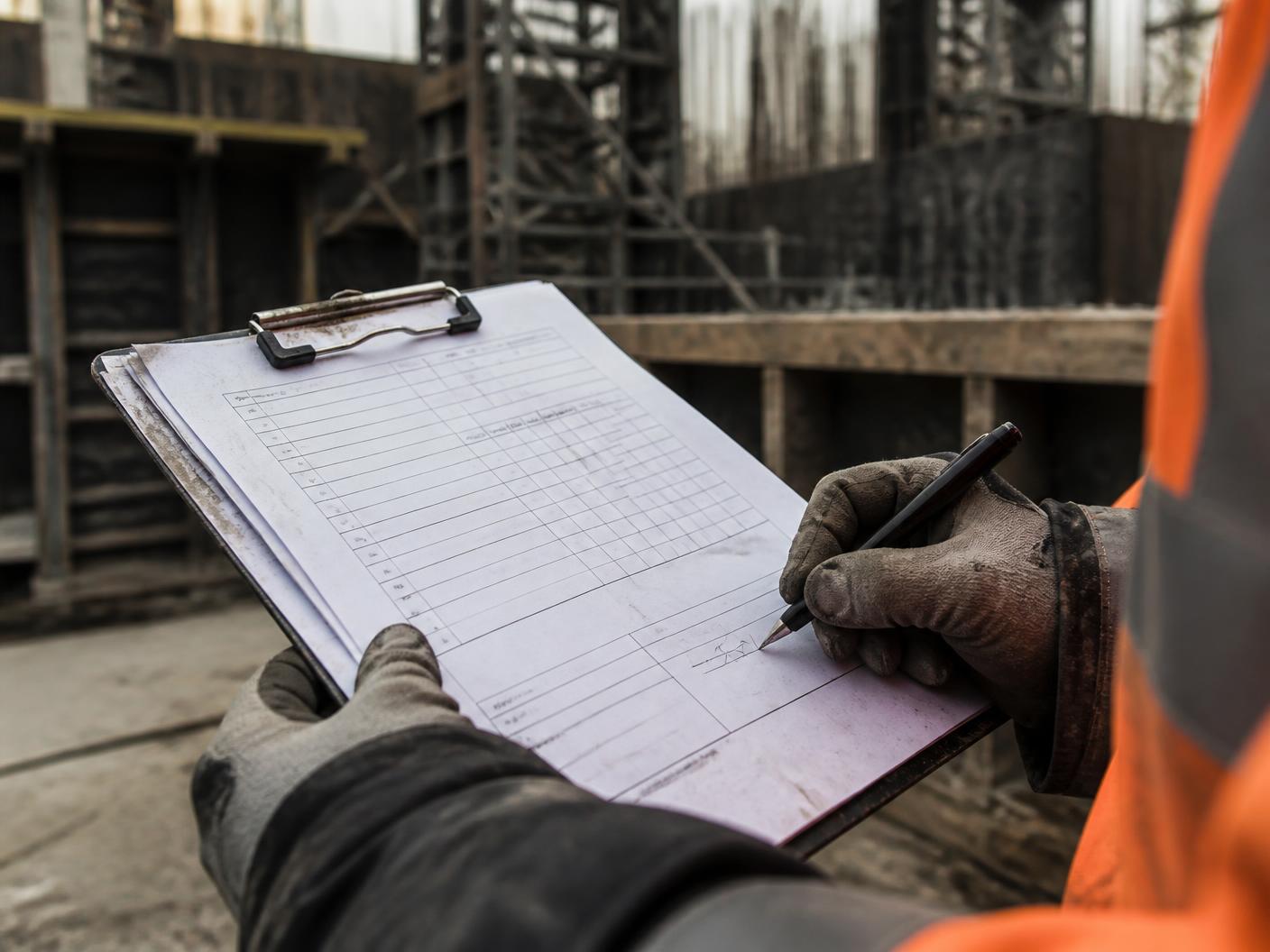
Activity hazard analysis document being reviewed with a construction crew before work begins

    Safety Documentation

    Activity Hazard Analysis (AHA) Preparation

    Activity hazard analyses written by definable feature of work — real sequence, real hazards, specific controls — so they get accepted by the reviewer and used by the foreman during pre-task planning.

    The problem

    The AHA is the most requested and least useful document on most projects.

    An activity hazard analysis is supposed to break a definable feature of work into its steps, identify the hazards in each step, and state the controls that make the step survivable. Done well, it is the single most useful safety document on a project, because it is the only one written at the level the crew works.

    Done the way it usually gets done, it is a copied file with the project name changed, a hazard column that says "struck by, caught between, slips trips falls," and a control column that says "use proper PPE, follow all applicable regulations, be aware of surroundings." A reviewer can reject that. Worse, a foreman can read it and learn nothing.

    What goes wrong

    Eight deficiencies we see in submitted AHAs.

    • Steps written as scope, not sequence — "install piping" instead of the actual order of operations, so hazards cannot be tied to anything.
    • Generic hazard lists copied across every activity, which means the analysis was never performed for this task.
    • Controls that restate the rule instead of naming the control — "use fall protection" with no anchorage, no system, no rescue plan.
    • No equipment specificity: no model or type, no inspection requirement, no pre-use check tied to the step that uses it.
    • Competent and qualified person requirements missing, or named without stating what the designation requires.
    • Training and certification requirements absent, so nobody can verify the crew on the step is authorized to perform it.
    • No interface with adjacent trades or overhead work, which is where a large share of multi-employer exposure lives.
    • Never revised after the sequence, means, or methods changed, leaving an accepted document that describes work nobody is doing.

    What we deliver

    What a usable AHA contains.

    Steps in real sequence

    The work broken down as it is actually performed, including setup, access, the operation itself, and demobilization — the phases where a disproportionate share of incidents occur.
    Hazards tied to the step

    Each hazard identified against the specific step that creates it, with the exposure described rather than a category label.

    Controls that name the control

    Elimination and engineering controls first, then administrative controls and PPE — with the system, the anchorage, the barricade, the permit, the equipment, and the inspection stated explicitly.

    Equipment and inspection requirements

    The equipment used in each step, the pre-use or periodic inspection it requires, and who performs it.

    Personnel requirements

    Competent and qualified person designations where the standards require them, plus the training and certifications the step demands.

    Interfaces and emergency response

    Adjacent and overhead work, coordination requirements, and step-specific emergency and rescue provisions — including trench and fall rescue capability.

    How the work runs

    Written with the people performing the work.

    1. 01

      Requirements & format

      The owner or GC specification, required template, and the review and acceptance process — including any USACE-influenced format expectations.

    2. 02

      Scope breakdown

      Definable features of work identified, and a working session with the superintendent or foreman on actual sequence, crew, equipment, and access.

    3. 03

      Draft & technical review

      A draft you verify for accuracy, revised until it describes the work correctly and satisfies the review format.

    4. 04

      Field use & revision

      Direction on using the AHA in pre-task planning, plus revisions when sequence, means, methods, or site conditions change.

    Scopes we prepare AHAs for

    Common definable features of work.

    • Excavation, trenching, shoring, and underground utility work
    • Structural steel erection, decking, and connection work
    • Concrete formwork, shoring, placement, and post-tensioning
    • Crane setup, critical lifts, rigging, and material handling
    • Elevated work: scaffolding, aerial lifts, leading edge, and roofing
    • Electrical installation, temporary power, energized work, and lockout/tagout
    • Mechanical, piping, and process installation, including hot work
    • Confined space entry, tank and vault work, and rescue provisions
    • Demolition, selective demolition, and structural modification
    • Commissioning and startup activities alongside ongoing construction

    Common questions

    How is an AHA different from a JHA or JSA?
    The structure is the same idea — break the task down, identify hazards, define controls. AHA is the term used on federal and many owner-driven construction projects, and it typically carries a formal acceptance requirement and additional required content such as training, inspection, and competent-person entries.
    How many AHAs does a project need?
    One per definable feature of work. A modest project might have a handful; a large industrial or data center project can require dozens. We help identify the breakdown so you are not writing one enormous document or fifty redundant ones.
    Can you write them from drawings and specs?
    Partly. We build the technical structure from the documents, but the sequence detail has to come from the people performing the work. A short session with the superintendent or foreman is what separates an accepted AHA from a rejected one.
    Who signs and presents the AHA?
    That depends on the owner requirement, but the contractor performing the work owns it. It should be reviewed with the crew before the activity starts and again when the crew or conditions change — that is the point of the document.
    Our GC gave us their AHA. Is that enough?
    Usually not for your scope. A general contractor's AHA covers their planning and their means. If you are self-performing the work, the analysis of your steps, equipment, and crew has to be yours.

    Need AHAs before you mobilize?

    Send the scope, the owner requirement or template, and your mobilization date. We will confirm the definable features of work and a realistic turnaround.

    Nebraska-based · nationwide project support