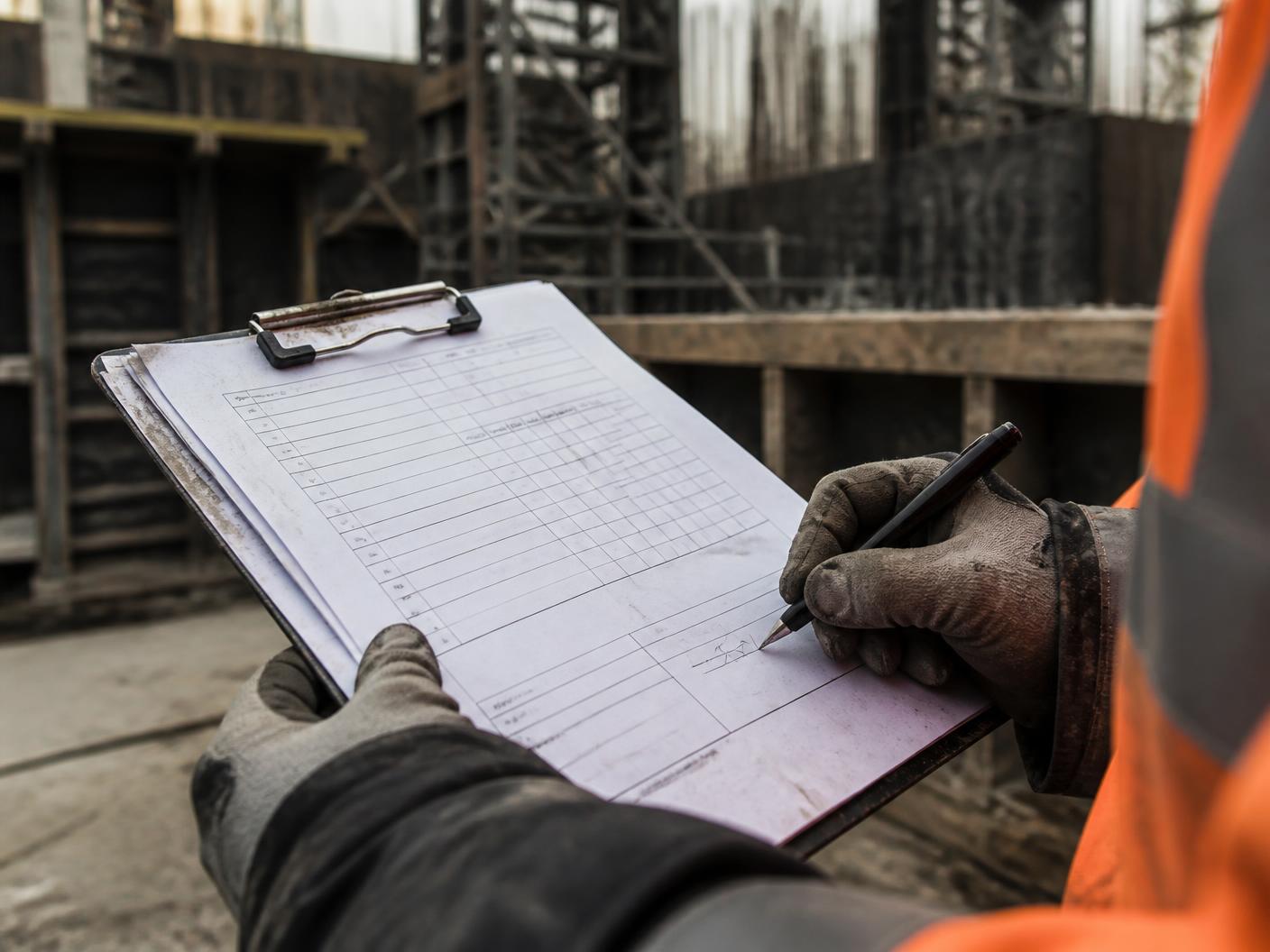
Construction safety documentation prepared for review at a project site office

    Safety Documentation

    Construction Safety Documentation

    Activity hazard analyses, site-specific safety plans, and written safety programs prepared to be accepted by the owner and actually used by the crew performing the work.

    The problem

    Documentation is where mobilization stalls.

    Before crews reach the site, someone has to produce documents: a site-specific safety plan, an activity hazard analysis for each definable feature of work, written programs for the exposures in scope, and qualification records for the people performing the work. On federal, data center, and industrial projects, these are gate items — no accepted documentation, no mobilization.

    The two failure modes are opposite and equally costly. Documents get written to satisfy a reviewer and end up too generic to guide the work, or they get written by someone who knows the work but not the required format and get returned for revision cycles that burn the schedule.

    We write documents that pass review and hold up at the work face — because the second is what makes the first defensible.
    What we produce

    Three core document sets.

    Activity Hazard Analysis (AHA)

    Task-level analysis by definable feature of work: steps in real sequence, hazards for each step, specific controls, and the training, inspection, and competent-person requirements the work triggers.

    • Owner and GC review formats
    • Equipment and inspection requirements
    • Written for pre-task use by the crew

    Site-Specific Safety Plans

    The project-level plan: site conditions, scope and sequence, responsibilities and contacts, controls by exposure, emergency response and rescue, and subcontractor management.

    • Owner requirement alignment
    • Emergency and rescue planning
    • Phase-based revision structure

    Written Safety Programs

    The corporate programs the standards and your clients require — written around your operations, your equipment, and the roles you staff.

    • Standard-required programs
    • Field-facing forms and permits
    • Program review and rewrite

    How the work runs

    From scope to accepted document.

    1. 01

      Requirements

      The contract, owner specification, and any required template or review process — so we write to the standard the reviewer will apply.

    2. 02

      Scope detail

      A working conversation with the people who will perform the work: sequence, equipment, crew size, access, and known constraints.

    3. 03

      Draft & review

      A draft you review for accuracy, followed by revision. Documents that describe work incorrectly get corrected before submission, not after rejection.

    4. 04

      Revisions in the field

      When means, methods, or sequence change, the document gets revised. Documentation that stops tracking the work stops being useful.

    Where documentation is a gate item

    Projects that demand it.

    • Federal and USACE-influenced work with formal AHA acceptance requirements.
    • Data center construction with owner safety specifications and contractor onboarding review.
    • Industrial and energy projects with permit-driven work and high-consequence exposures.
    • General contractors requiring subcontractor plans and AHAs before mobilization.
    • Prequalification and insurance reviews requesting written programs by exposure.
    • Any project where a phase change makes the accepted documentation no longer describe the work.

    Documentation due before mobilization?

    Send the owner requirements and the scope. We will tell you what has to be produced, in what format, and how quickly it can be turned around.

    Nebraska-based · nationwide project support