Document-to-field comparison
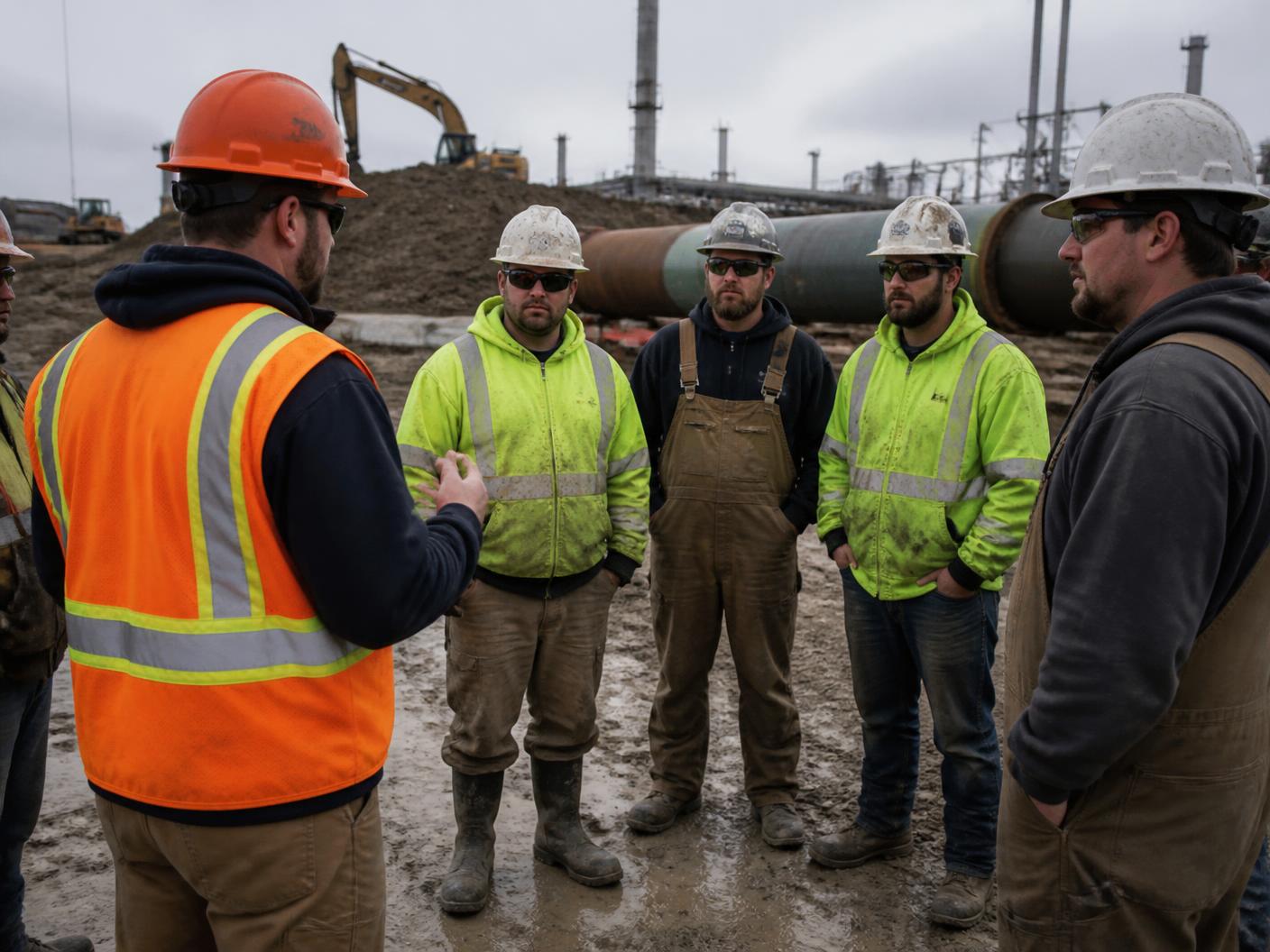
We read the site-specific safety plan and the hazard analyses in effect for the active scope, then verify in the field whether the controls described are in place and being used.
Safety Consulting
Independent audits and jobsite inspections that compare what your documentation says against what is actually happening at the work face — and produce findings a project team can close.
The problem
Most projects are already doing inspections. The recurring complaint is not frequency — it is that the output does not change anything. Findings are written vaguely, they are not assigned, the same three items appear every week, and nobody can tell from the record whether an exposure was actually corrected or simply photographed again.
The second problem is proximity. A person who works on the project every day stops seeing the extension cord across the walkway, the guardrail that was modified for a delivery, or the ladder that has been used as a work platform for a month. An independent set of eyes catches what familiarity hides.
What it involves
We read the site-specific safety plan and the hazard analyses in effect for the active scope, then verify in the field whether the controls described are in place and being used.
Fall protection, excavation and trenching, energized work and lockout, lifting and rigging, scaffolding and access, confined space, silica and other health exposures, mobile equipment and traffic.
Training and qualification records, equipment inspections, competent-person designations, pre-task plans, and whether required documentation is being produced by the crews performing the work.
Whether each subcontractor is executing their own written program and hazard analyses, or relying on the general contractor's documentation to cover their scope.
How the work runs
We review the plan, active AHAs, and prior inspection reports so the walk targets real scope instead of general impressions.
Observation of active work, conversations with foremen and crews, and verification of controls, equipment, and required documentation.
A same-day verbal debrief with the project team so nothing that matters waits on a written report.
A ranked, assignable findings report, plus a follow-up walk to verify closure when the engagement is recurring.
When to use it
Common questions
Related services
When audit findings raise standard interpretation questions.
Root-cause analysis when an event has already occurred.
Audits frequently trace findings back to a weak AHA.
The plan an audit measures the field against.
When repeat findings point to a program gap, not a crew.
Daily coverage when periodic auditing is not enough.
Tell us the project, the active scope, and what your current inspection process produces. We will tell you what an audit would realistically surface.
Nebraska-based · nationwide project support